



Subtotal $0.00
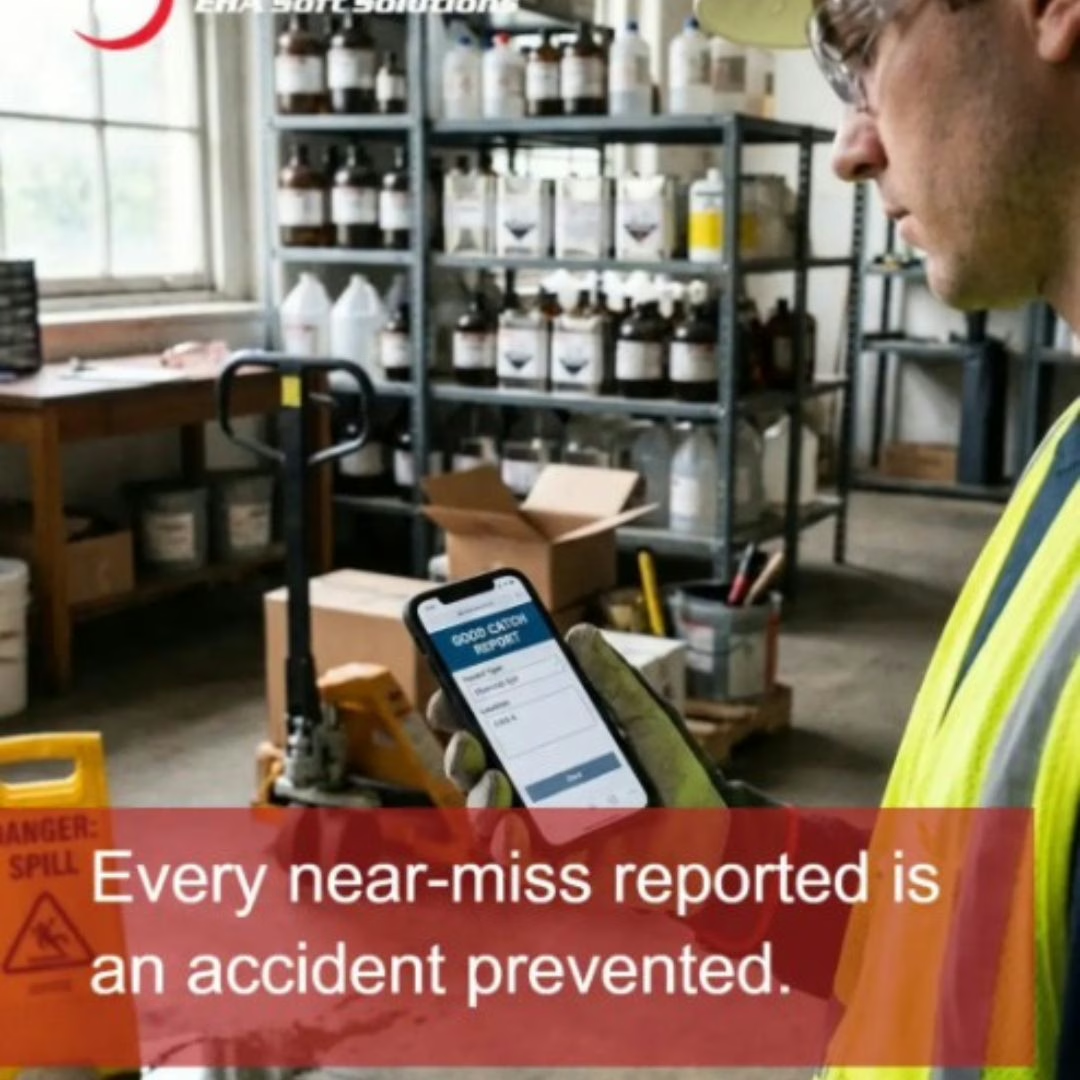
Every serious workplace accident is usually preceded by smaller warning signs. A slippery surface that went unnoticed. A faulty tool that was temporarily ignored. A shortcut that felt harmless at the moment. These moments are known as near-misses, and they carry powerful lessons if organizations choose to learn from them. The difference between a near-miss and a life-altering incident is often only a matter of timing. What truly defines a company’s safety maturity is what happens after that warning appears.
This is where a well-structured Good catch system becomes essential. Rather than waiting for injuries to force change, organizations that adopt proactive safety reporting begin correcting risks before they turn into disasters. When employees feel confident to report hazards and management responds with visible action, safety becomes a shared responsibility rather than a compliance obligation.
Why Near-Miss Reporting Is the Backbone of Prevention
Near-miss reporting is not about blame. It is about awareness, improvement, and building systems that protect people before harm occurs. Yet many unsafe conditions still go unreported because employees fear consequences, doubt follow-up, or assume someone else will handle it. Over time, this silence allows minor hazards to grow into major safety failures.
A structured Good catch safety program changes this mindset. It gives workers a simple and trusted way to raise safety concerns without fear. More importantly, it ensures that every report leads to action, investigation, and closure rather than disappearing into paperwork. When people see real outcomes, participation increases, and safety awareness spreads naturally across the organization.
The Role of Digital Safety Systems in Safety Awareness
Traditional paper-based safety reporting methods often fail because they are slow, difficult to track, and easy to ignore. Reports can sit in files for weeks without action, reducing trust in the process. Digital safety tools remove these delays and replace them with instant communication and accountability.
Modern platforms such as EHA management software bring all safety processes into one connected ecosystem. When a worker logs a hazard, it is instantly visible to supervisors, safety officers, and compliance teams. Automated workflows ensure that the report reaches the right person at the right time. This speed and transparency could help organizations shift from reactive response to true prevention.
By connecting near-miss reporting with audits, corrective actions, and investigations, digital systems transform safety into a continuous improvement cycle rather than a checklist activity.
How a Good Catch Program Encourages Safety Ownership
Safety does not live only in policy documents. It lives in daily decisions made on shop floors, construction sites, warehouses, laboratories, and field locations. A successful Good catch program empowers workers at every level to take ownership of their surroundings.
When employees are encouraged to report hazards through simple mobile or desktop tools, safety becomes part of routine behavior. Uploading a photo of a damaged cable or leaking valve takes seconds, yet it can prevent serious injuries. Over time, this habit builds collective responsibility where workers watch out not just for themselves but for their teammates as well.
This cultural shift could help companies move beyond rule-based compliance and toward behavior-driven safety excellence.
Linking Good Catch Systems with Environmental Health and Safety Goals
Workplace safety does not exist in isolation. It is deeply connected to broader Environmental health and safety objectives such as pollution control, chemical handling, waste management, and emergency preparedness. A near-miss involving hazardous material, for example, is not only a physical danger to workers but also a potential environmental threat.
By integrating Good Catch reporting with environmental risk management, organizations gain a wider view of operational risks. Small environmental incidents that once went unnoticed can now be captured early, investigated thoroughly, and prevented from repeating. This alignment strengthens both worker protection and environmental responsibility under a single safety framework.
Real-Time Visibility and Why It Matters
One of the greatest challenges in safety management is the lack of real-time visibility. When leaders rely on monthly reports or delayed updates, critical patterns remain hidden. Digital Good Catch systems change this completely by offering live dashboards, trend analysis, and immediate insights into emerging risks.
When management can see repeated near-misses linked to the same equipment, location, or task, targeted corrective actions become possible. Instead of reacting after an injury, organizations start eliminating hazards at the root. This level of insight could help safety teams shift from firefighting mode to predictive prevention.
Accountability That Builds Trust, Not Fear
Many safety programs fail because workers do not trust the follow-up process. They may report hazards once or twice and stop when they see no response. Effective Good Catch systems are designed around visible accountability. Every report is assigned, tracked, reviewed, and closed with documented action.
When employees see that management consistently responds, trust grows. Reporting increases. Safety conversations become more open. This positive loop strengthens engagement and reinforces the idea that safety is a shared goal, not a top-down order.
The Impact of Good Catch on Contractor and Visitor Safety
Modern workplaces rely heavily on contractors, vendors, and visitors. These individuals often face higher risks because they may be unfamiliar with site-specific hazards. A connected Good Catch environment allows everyone on-site, not just permanent employees, to participate in hazard reporting.
Contractors can instantly report unsafe conditions they observe. Visitors can flag hazards without complex procedures. This inclusive approach reduces blind spots and ensures that safety does not stop at organizational boundaries. Over time, this unified participation could help organizations achieve stronger overall safety performance.
Turning Safety Data into Prevention Strategy
Collecting safety reports is only the first step. The true value lies in analyzing patterns and trends over time. Advanced digital platforms allow organizations to identify recurring hazards, high-risk activities, and weak points in safety controls.
By linking Good Catch data with inspections, audits, and corrective actions, companies create a living safety intelligence system. This strategic use of data could help leadership prioritize investments, improve training programs, and strengthen safety procedures based on real-world evidence rather than assumptions.
Good Catch Systems as a Foundation for Proactive Safety Culture
A proactive safety culture is not built overnight. It is the result of consistent communication, transparent processes, and visible leadership commitment. Good Catch systems serve as the foundation for this culture by giving everyone a voice in safety improvement.
When workers know that their observations matter and their reports lead to measurable change, they become active participants rather than passive rule-followers. This mindset shift could help organizations reduce injuries, strengthen compliance, and protect both people and operations in the long run.
Why Prevention Builds More Than Compliance
Reducing accident statistics is important, but the true impact of prevention goes much deeper. When employees feel protected, valued, and heard, trust increases across the organization. Teams communicate more openly. Morale improves. Productivity rises. Most importantly, families know their loved ones return home safely at the end of each shift.
A connected Good catch safety program, supported by strong digital infrastructure and aligned with Environmental health and safety goals, does more than prevent incidents. It builds confidence, accountability, and long-term operational resilience. That is the true value of proactive safety.
Supporting Proactive Safety with EHA Soft Solutions
A strong safety culture thrives on awareness, accountability, and the right digital support. This is where EHA Soft Solutions plays a meaningful role by helping organizations move beyond reactive safety practices toward structured prevention. With intelligent safety modules designed around real operational needs, EHA platforms could help teams simplify hazard reporting, strengthen compliance visibility, and connect safety actions across departments.
By aligning near-miss reporting with audits, corrective actions, and broader Environmental health and safety goals, EHA Soft Solutions supports organizations in building safety ecosystems that are not only compliant—but resilient, trusted, and future-ready.
Reach out today to start your trial.
Book your personalized demonstration today
🚀 Start a trial today and see how our platform can support your safety goals!
📧 info@ehasoft.com | 🌐 www.ehasoft.com
📞 USA: +1 (941) 337-167
📞 IE: +353 21 4536034
📞 UK: +44 800 8021092
For more information on how our solutions could help your organization stay ahead, contact us today!

Comments are closed