



Subtotal $0.00

Workplace safety depends on more than simply documenting what went wrong. Organizations need a clear way to report incidents, investigate the root cause, and implement corrective actions that prevent the same issue from happening again. When incident data is scattered across emails, spreadsheets, or paper forms, it becomes difficult to identify patterns, track investigations, or ensure proper follow-up.
This is where a modern incident reporting and investigation approach becomes essential. By using a structured digital solution, companies can capture incidents quickly, investigate them thoroughly, and connect findings with preventive actions. An effective Incident reporting software solution does more than collect information—it transforms incident data into meaningful insights that support a safer and more compliant workplace.
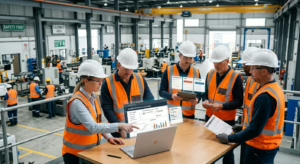
Understanding Incident Reporting and Investigation
Many organizations confuse incident management with security monitoring or IT event tracking. However, in health, safety, and operational environments, the real focus is on incident reporting and investigation.
Incident reporting refers to the process of documenting workplace events such as accidents, near misses, unsafe conditions, or operational failures. Investigation then follows to determine why the incident occurred and what corrective actions could help prevent it from happening again.
A well-designed Workplace incident reporting system allows employees to record incidents quickly while giving safety teams the tools needed to analyze causes, identify trends, and implement improvements.
When this process is handled manually, valuable information can be lost. Reports may be delayed, investigations may lack structure, and corrective actions may never be tracked properly. Digital Incident investigation software helps close these gaps by centralizing information and providing a consistent framework for analyzing events.

Why Organizations Need a Centralized Reporting Approach
Safety incidents often involve multiple teams, departments, and stakeholders. Without a centralized platform, each group may store information differently, creating fragmented records and inconsistent investigations.
A modern Incident report and investigation software platform helps bring all relevant information together in one place. Employees can submit incident reports immediately, supervisors can review and assign investigations, and safety managers can track progress in real time.
This centralized approach could help organizations improve transparency and accountability across the entire investigation process. Instead of chasing emails or searching through documents, teams can access complete incident histories from a single dashboard.
More importantly, centralization makes it easier to detect patterns. When multiple incidents share similar causes, the system can highlight trends that may require deeper analysis or preventive action.

Turning Incident Data Into Preventive Action
Reporting an incident is only the first step. The real value lies in understanding why the incident occurred and how it could be prevented in the future.
Effective Health and safety incident reporting systems support structured investigation workflows. These workflows guide investigators through key steps such as identifying contributing factors, documenting findings, and recommending corrective actions.
When investigations follow a consistent structure, organizations gain more reliable insights into workplace risks. Over time, these insights could help companies improve training programs, update procedures, and strengthen safety policies.
The ability to link investigations with broader risk management activities also plays a critical role. When investigation findings are connected to risk assessments, organizations can update their risk registers and control measures based on real-world events.
This connection ensures that lessons learned from incidents lead to meaningful improvements rather than simply being recorded and forgotten.
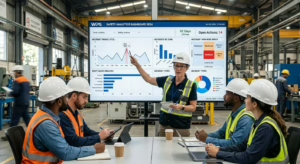
Configurable Investigation Workflows for Different Industries
Every organization handles incidents differently. Manufacturing facilities, construction companies, healthcare providers, and logistics operations all face unique safety challenges.
Because of this, incident reporting tools must be adaptable rather than rigid. Highly configurable Incident reporting software allows organizations to customize reporting forms, investigation steps, approval workflows, and notification processes based on their specific needs.
This flexibility could help companies align their incident reporting processes with internal policies, regulatory requirements, and industry best practices.
Configurable workflows also make it easier to scale safety programs as organizations grow. New departments, locations, or operational processes can be integrated into the reporting system without disrupting existing workflows.
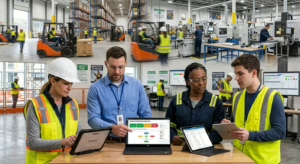
Supporting Data Privacy and GDPR Compliance
Incident reports often contain sensitive information about employees, contractors, or operational incidents. Protecting this data is essential, particularly for organizations operating under strict privacy regulations.
Advanced Incident investigation software includes built-in safeguards to protect confidential information. These safeguards may include role-based access controls, secure data storage, and configurable permissions that ensure only authorized users can view or modify incident records.
Organizations operating in regulated environments must also consider data privacy requirements such as GDPR. A modern Incident report and investigation software platform can incorporate advanced techniques designed to support compliance by controlling how personal data is stored, accessed, and processed.
This focus on privacy not only protects individuals but also helps organizations maintain trust and regulatory compliance.

Connecting Investigations With Risk Management
One of the most powerful aspects of an integrated incident system is its ability to connect investigation findings with risk management activities.
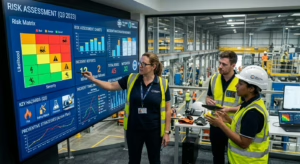
When an investigation identifies the root cause of an incident, the findings should feed directly into risk assessments. This connection ensures that identified hazards are documented, evaluated, and addressed within the organization’s broader safety framework.
A connected Workplace incident reporting system could help organizations update risk assessments automatically after incidents occur. For example, if an equipment malfunction leads to a workplace injury, the associated risk assessment can be reviewed and updated to reflect the new information.
By linking incident investigations with risk assessments, organizations can move from reactive reporting to proactive prevention.
Encouraging a Culture of Reporting
For any incident reporting system to succeed, employees must feel comfortable reporting incidents and near misses. A complicated or time-consuming reporting process often discourages participation.
Digital Incident reporting software simplifies this process by allowing employees to submit reports quickly through user-friendly interfaces. Mobile accessibility can also make it easier for workers to report incidents directly from the field.
When reporting becomes simple and accessible, organizations often see an increase in near-miss reporting. These reports provide valuable early warnings that could help prevent serious accidents in the future.
By encouraging open reporting and transparent investigations, companies can strengthen their overall safety culture.

The Value of a Smarter Incident Reporting System
A modern Health and safety incident reporting solution provides more than a place to store incident reports. It creates a structured process that guides organizations from reporting to investigation and ultimately to prevention.
With centralized reporting, configurable investigation workflows, privacy safeguards, and connections to risk management, organizations gain the tools needed to transform incident data into actionable insights.
When implemented effectively, Incident report and investigation software could help companies reduce recurring incidents, improve compliance, and create a safer environment for employees and contractors.
In safety management, every incident represents an opportunity to learn. The right system ensures those lessons lead to meaningful improvements rather than becoming lost in disconnected reports.
Take Control: Start Your Trial Today
Workplace incidents don’t have to lead to repeated problems or unresolved investigations. With the right incident reporting and investigation tools in place, organizations can capture incidents quickly, investigate them effectively, and turn every report into an opportunity to improve safety.
EHA Soft’s mai™ Incident Report & Investigation solution could help organizations simplify health and safety incident reporting, streamline investigations, and connect findings directly with risk assessments to prevent future occurrences. With a highly configurable platform, secure data handling, and a centralized workplace incident reporting system, teams gain better visibility and control over every stage of the reporting and investigation process.
If you’re ready to improve how your organization handles incidents and near misses, EHA Soft could help you take the next step toward smarter reporting, stronger investigations, and a safer workplace. Start your trial today and experience a more efficient approach to incident reporting and investigation.

Book your personalized demonstration today
🚀 Start a trial today and see how our platform can support your safety goals!
📧 info@ehasoft.com | 🌐 www.ehasoft.com
📞 USA: +1 (941) 337-1671
📞 IE: +353 21 4536034
📞 UK: +44 800 8021092
For more information on how our solutions could help your organization stay ahead, contact us today!

Comments are closed