



Subtotal $0.00
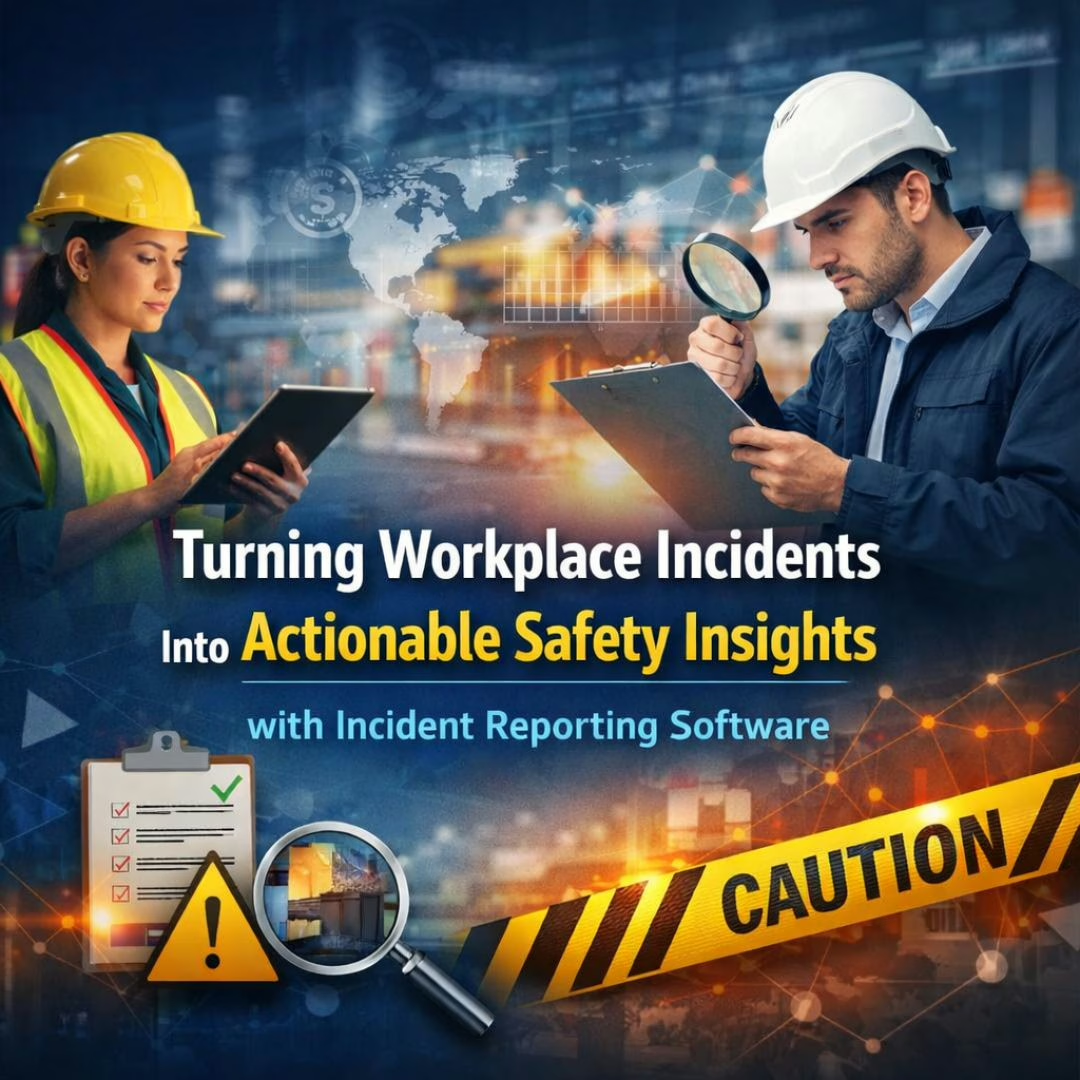
Workplace incidents are not just events to be recorded—they are critical learning opportunities. When incidents, near-misses, or hazards occur, the real value comes from how organizations capture, investigate, and act on that information. A structured approach to incident reporting and investigation could help organizations strengthen safety performance, improve compliance, and prevent future occurrences.
Modern organizations increasingly rely on Incident reporting software and Incident investigation software to move beyond reactive documentation and toward proactive prevention. By transforming raw incident data into actionable insights, businesses can create safer, more resilient workplaces.
Why Incident Reporting and Investigation Matter More Than Ever
Every incident tells a story. Sometimes it reveals gaps in procedures, training, equipment, or risk controls. Without a structured system, these lessons can be lost in paper forms, disconnected emails, or spreadsheets.
A digital Workplace incident reporting system could help organizations centralize information, standardize investigations, and ensure corrective actions are implemented. Instead of simply filing reports, organizations can use structured investigations to identify root causes and reduce the likelihood of recurrence.
In regulated industries, accurate documentation also supports compliance with safety standards and demonstrates accountability during audits or inspections.
What Is Incident Reporting and Investigation Software?
Incident reporting and investigation software is designed to help organizations capture workplace incidents, analyze causes, and manage follow-up actions. Unlike traditional manual processes, digital systems provide structured workflows, traceability, and real-time visibility across teams and locations.
A comprehensive Incident report and investigation software platform enables employees to submit reports quickly, safety teams to conduct structured investigations, and managers to monitor corrective actions through to closure. This approach could help organizations transition from reactive responses to continuous improvement.
Capturing Incidents Anytime, Anywhere
Timely reporting is essential. When incidents are recorded immediately, details are more accurate, and early actions can be taken to reduce risk.
A modern Health and safety incident reporting solution allows employees and contractors to log incidents, near-misses, and hazards directly from their devices, regardless of location. This accessibility encourages reporting and reduces delays caused by manual processes.
By simplifying the reporting process, organizations can improve participation and visibility across their workforce.
Configurable Investigation Workflows for Real-World Processes
No two organizations investigate incidents in exactly the same way. That is why configurability is essential in modern Incident investigation software.
Configurable workflows could help organizations align investigations with internal procedures, regulatory requirements, and industry best practices. From assigning investigation roles to defining evidence collection steps and review stages, a flexible system ensures that investigations reflect how teams actually work.
This adaptability is particularly valuable for organizations operating across multiple sites, regions, or regulatory environments.
Root Cause Analysis Without Complexity
Understanding why an incident happened is critical to preventing recurrence. Structured root cause analysis helps organizations move beyond symptoms and identify underlying systemic issues.
Advanced investigation tools could help teams apply structured methodologies and capture findings in a consistent, traceable format. Instead of static diagrams or disconnected reports, organizations can maintain a centralized record of investigation outcomes, lessons learned, and preventive measures.
By linking investigation findings to corrective actions, organizations can ensure that insights lead to real change.
Corrective Actions That Drive Prevention
Incident investigations are only effective if they result in meaningful corrective actions. Digital platforms track actions from assignment to closure, ensuring accountability and transparency.
A robust Incident report and investigation software solution could help organizations monitor deadlines, verify completion, and maintain audit-ready records. This structured follow-up process reduces the risk of repeated incidents caused by unresolved issues.
When corrective actions are visible and tracked, organizations can demonstrate proactive risk management.
Integration With Risk Assessment for Preventing Recurrence
Incident investigation should not operate in isolation. Linking investigation insights with risk assessment processes could help organizations proactively reduce future risks.
By integrating incident findings with risk assessment modules, organizations can update hazard registers, modify risk controls, and refine safety procedures. This connected approach transforms incidents into predictive insights that support continuous improvement.
A unified system could help organizations close the loop between incidents, risks, and preventive measures.
Data Privacy and GDPR Compliance
Incident reports often contain sensitive personal and operational information. Ensuring data privacy is essential for compliance and trust.
Advanced platforms incorporate security controls, access permissions, and privacy safeguards to protect incident data. GDPR-aligned features ensure that personal data is handled responsibly, stored securely, and accessed only by authorized users.
This focus on privacy could help organizations meet regulatory requirements while maintaining transparency.
Building a Culture of Safety Through Reporting
Technology alone cannot create a safety culture—but it can support it. When employees see that incidents are reported, investigated, and acted upon, they are more likely to participate in safety programs.
A structured Workplace incident reporting system could help organizations demonstrate that every report matters. Transparency, accountability, and visible outcomes reinforce trust and encourage proactive reporting of hazards and near-misses.
Over time, this approach can strengthen engagement and reduce workplace risks.
From Compliance to Continuous Improvement
Incident reporting and investigation are often viewed as compliance tasks. However, modern organizations recognize them as strategic tools for operational excellence.
Digital Incident reporting software enables organizations to analyze trends, identify recurring issues, and prioritize preventive measures. Data-driven insights support smarter decisions and targeted safety initiatives.
This continuous improvement approach could help organizations reduce incidents, improve productivity, and protect their workforce.
The Future of Incident Reporting and Investigation
As workplaces become more complex, the need for intelligent, connected safety systems continues to grow. Digital platforms that integrate reporting, investigation, corrective actions, and risk assessment provide a holistic approach to safety management.
Organizations that adopt structured, configurable, and privacy-conscious tools are better positioned to learn from incidents and prevent future harm.
Conclusion: Turning Incidents Into Prevention Opportunities
Incident reporting and investigation are not about documenting failures—they are about preventing the next one. A modern Health and safety incident reporting solution can transform incidents into actionable insights, strengthen compliance, and support a proactive safety culture.
By capturing accurate reports, conducting structured investigations, tracking corrective actions, and linking findings to risk assessments, organizations can move from reactive responses to preventive intelligence. With configurable workflows and GDPR-compliant data protection, digital tools could help organizations build safer, smarter, and more resilient operations.
Book your personalized demonstration today
🚀 Start a trial today and see how our platform can support your safety goals!
📧 info@ehasoft.com | 🌐 www.ehasoft.com
📞 USA: +1 (941) 337-1671
📞 IE: +353 21 4536034
📞 UK: +44 800 8021092
For more information on how our solutions could help your organization stay ahead, contact us today!

Comments are closed