



Subtotal $0.00
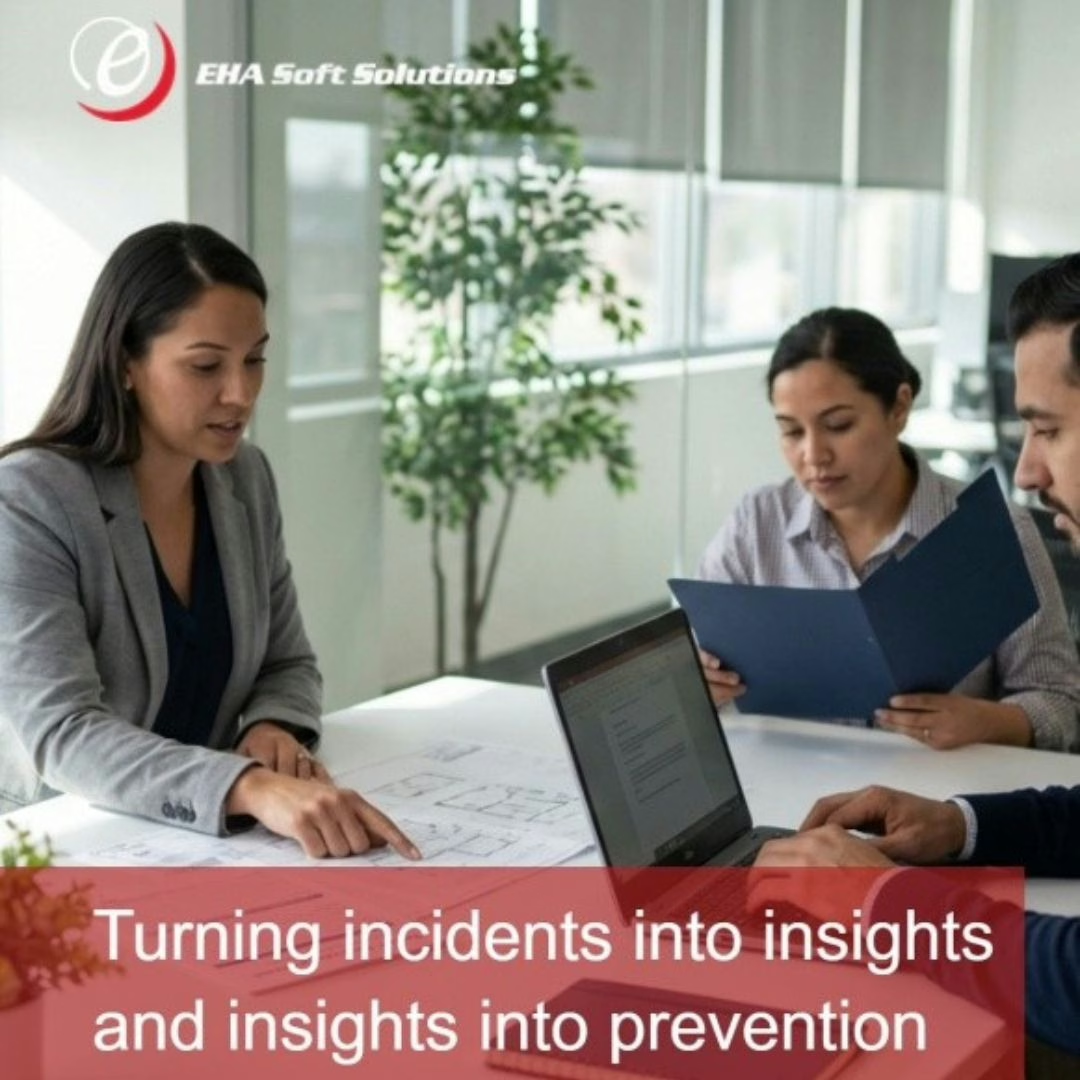
Most organizations have no real difficulty capturing incidents. Forms get filled, reports are logged, and records are stored. Yet the same injuries, near misses, and unsafe conditions continue to surface again and again. The gap is rarely in reporting itself. The gap is in what happens next.
Incident reporting without structured investigation only documents what went wrong. It does not explain why it happened or how to stop it from happening again. This is where many safety programs quietly fail — not due to lack of effort, but due to disconnected systems and inconsistent investigation practices.
Effective incident reporting and investigation is not about managing events after the fact. It is about learning from them and building safeguards that prevent recurrence.
Why Incident Reporting Needs Investigation to Create Real Value
A basic workplace incident reporting system could help organizations meet compliance requirements and maintain records. However, when reports sit in isolation — stored in spreadsheets, PDFs, or email chains — patterns remain hidden and lessons remain unused.
Without investigation, near misses often get dismissed as “minor.” Contributing factors are overlooked. Corrective actions are inconsistently followed up. Over time, small warning signs accumulate until they result in serious harm or operational disruption.
This is why incident investigation software plays a critical role. It bridges the gap between reporting and prevention by transforming raw data into structured insights and actionable outcomes.
Configurable Investigation Workflows That Reflect How You Work
No two organizations investigate incidents in exactly the same way. Some rely on the 5 Whys method, others use structured questioning models, and many apply their own internally approved approaches. A rigid system forces teams to adapt their processes to the software, which often leads to poor adoption.
A configurable incident report and investigation software could help organizations design investigation workflows that reflect their preferred methodology. Investigation stages, approval paths, data fields, and follow-up actions can be tailored to fit existing safety processes rather than replace them.
This flexibility ensures investigations remain consistent across departments while still respecting how different teams operate. More importantly, it keeps investigators focused on identifying root causes instead of fighting with templates.
Centralized Incident Data That Reveals Patterns Over Time
One of the most overlooked challenges in health and safety incident reporting is fragmentation. Reports live in different systems, formats, and locations, making meaningful analysis difficult.
Centralized reporting brings all incidents — from minor near misses to recordable injuries — into one secure environment. Over time, this consolidated data could help organizations identify recurring hazards, high-risk activities, and systemic weaknesses that are not visible when incidents are reviewed individually.
Searchable records, trend analysis, and historical visibility turn incident data into a strategic safety resource rather than an administrative burden.
Data Privacy and GDPR Compliance Built Into the Process
Incident investigations often contain sensitive employee, medical, and operational information. Without proper safeguards, this data can create privacy risks and regulatory exposure.
Advanced incident reporting software must treat data protection as a core design principle, not an afterthought. GDPR-compliant handling, encryption, role-based access controls, and full audit trails ensure that only authorized users can access sensitive information and that every action is traceable.
Strong data governance does more than protect compliance. It builds trust. When employees know their information is handled responsibly, they are more likely to report incidents and near misses honestly and promptly.
Linking Investigations With Risk Assessment to Prevent Recurrence
Investigation findings lose much of their value if they are not translated into preventive measures. A common failure point is when corrective actions are logged but never influence broader risk controls.
Direct integration between incident investigation software and risk assessment modules could help organizations close this loop. When investigation outcomes automatically inform risk registers, control measures can be reviewed, updated, or strengthened based on real-world evidence.
This connection ensures that lessons learned from incidents actively shape future safety planning. Over time, this reduces repeat events and strengthens the overall safety system.
Consistency Without Complexity Across the Organization
Large or multi-site organizations often struggle with inconsistent investigation quality. Different teams interpret requirements differently, leading to uneven results and unreliable data.
Customizable templates and automated alerts could help standardize investigations without adding unnecessary complexity. Investigators are guided through required steps, reminders ensure timely follow-up, and leadership gains visibility into progress without chasing updates.
Consistency does not mean rigidity. It means everyone follows the same principles while retaining the flexibility to address real-world conditions.
Why Reporting Engagement Improves When People See Results
Employees quickly notice when incident reports disappear into a system and nothing changes. Over time, this discourages reporting and weakens safety culture.
When reporting leads to visible improvements — updated procedures, new controls, or eliminated hazards — engagement naturally increases. People report more near misses, managers take investigations more seriously, and safety becomes proactive rather than reactive.
A well-designed workplace incident reporting system could help reinforce this positive cycle by showing that every report contributes to meaningful prevention.
Moving Beyond Documentation Toward Prevention
Reporting incidents is essential, but it is only the starting point. Without investigation, analysis, and preventive action, organizations are simply recording history.
Modern health and safety incident reporting solutions focus on learning, accountability, and continuous improvement. They connect people, processes, and data in a way that turns incidents into opportunities to strengthen systems before harm occurs.
Organizations relying on Word documents, emails, or disconnected tools may be meeting minimum requirements, but they are missing the chance to truly reduce risk.
Conclusion
Incident reporting and investigation is not about managing events — it is about preventing them from happening again. Configurable workflows, centralized data, GDPR-compliant privacy controls, and direct links to risk assessment could help organizations transform incident data into lasting safety improvements.
EHA Soft Solutions supports this approach by enabling organizations to report incidents effectively, investigate them thoroughly, and use the findings to reduce future risk through connected safety processes.
Reach out today to start your trial.
Book your personalized demonstration today
🚀 Start a trial today and see how our platform can support your safety goals!
📧 info@ehasoft.com | 🌐 www.ehasoft.com
📞 USA: +1 (941) 337-1671
📞 IE: +353 21 4536034
📞 UK: +44 800 8021092
For more information on how our solutions could help your organization stay ahead, contact us today!

Comments are closed